
⸻ KARTA PINTINGGA · KANGAROO ISLAND, SA · FIELD NOTES
Kangaroo Island Wildlife: What to See and How to See It
Some of it finds you at dawn,
others need a guide and the right season.
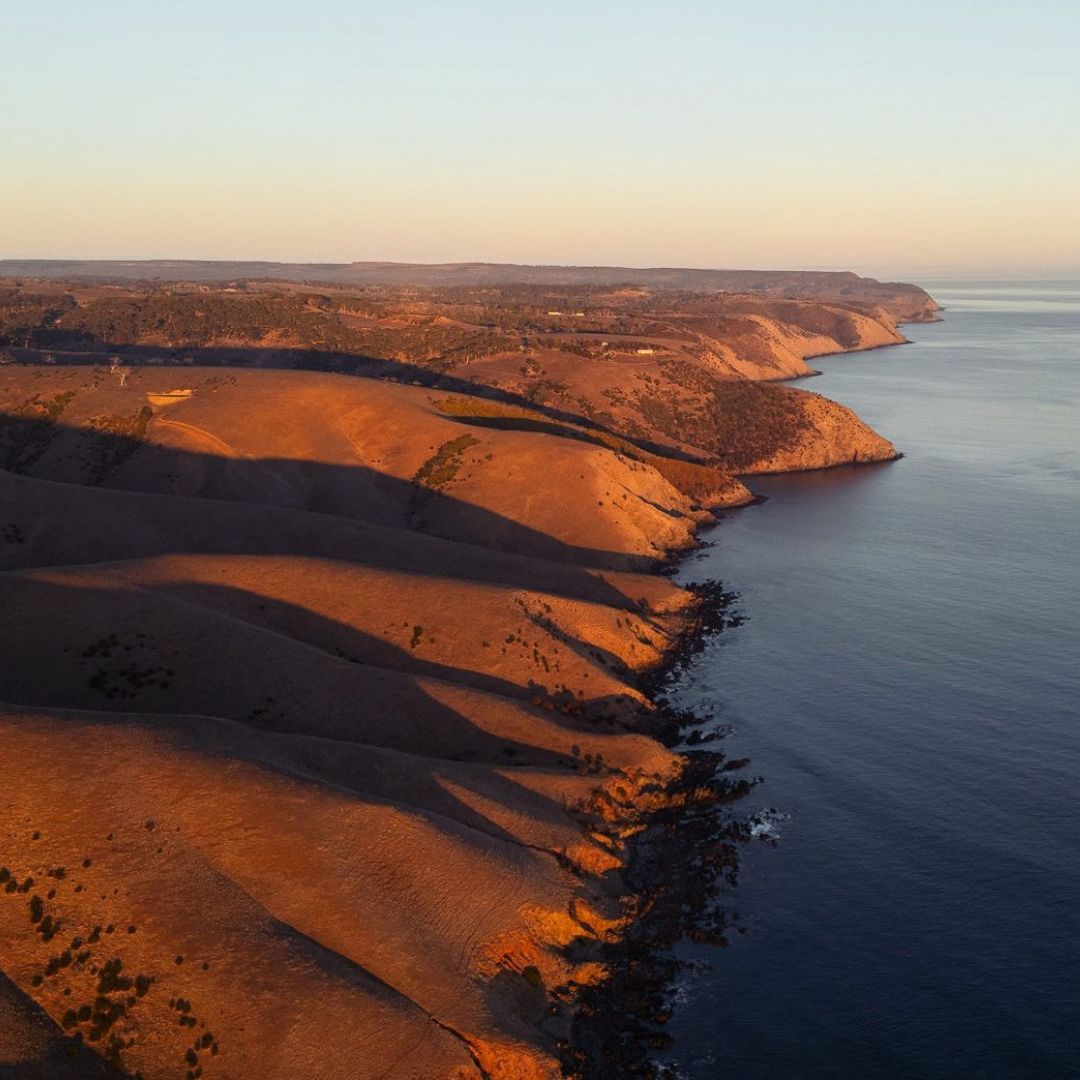
Kangaroo Island doesn't perform its wildlife for visitors. There's no gate, no scheduled encounter. A kangaroo grazes at the paddock's edge at dusk. A sea lion hauls out on the sand at Seal Bay regardless of who's watching. The island separated from mainland South Australia around 10,000 years ago, and foxes and rabbits never made it across, so species that have all but vanished from the Australian mainland are still common here, some found nowhere else on Earth.
This guide covers ten species worth knowing before you visit, what they are, when you're most likely to see them, and how rare or threatened each one actually is, followed by which experiences need a guide and which don't.
In this entry
6 sections
The short version
- On land
- In the skies
- In and around the water
- Seeing it with a guide
- Common questions
- Where you'd stay
Nothing here is staged.
That's what makes it worth paying attention to.
Choosing how to see it
Most of what's below needs nothing more than good timing, being outside at dawn or dusk, walking slowly, knowing roughly where to look. A smaller number of species and experiences genuinely benefit from, or require, a guide, and it's worth knowing which is which before you plan a day around one.
01
On land

Kangaroo Island western grey kangaroo
The island's namesake species is its own subspecies of the western grey kangaroo, found only here. It's stockier than mainland relatives and noticeably darker, a deep chocolate brown rather than grey-brown, and it's the only kangaroo species on the island. Mobs graze in open paddocks and roadside verges at dawn and dusk, which makes early morning and last light the most reliable viewing windows.
WHERE TO SEE IT
Open paddocks and roadside verges island-wide, including around the WanderPods
BEST TIME
Dawn and dusk
STATUS
Endemic subspecies

Kangaroo Island dunnart
Easy to miss and worth knowing about: the Kangaroo Island dunnart is a small carnivorous marsupial and the island's only endemic mammal, found nowhere else on Earth. It was already critically endangered before the 2019–2020 bushfires, with an estimated population under 500. The fires burned through much of its remaining habitat, and the population is now thought to number around 50, though dunnarts have since been recorded in both burnt and regrown country, a hopeful sign of their return.
WHERE TO SEE IT
Remaining habitat across the island's west, rarely encountered directly
BEST TIME
Nocturnal
STATUS
Critically endangered, the island's only endemic mammal

Southern brown bandicoot
Kangaroo Island's southern brown bandicoots are listed as endangered, both on the island and nationally. They feed on fungi and insects that come up after rain, and their digging, small conical pits in soft soil, is often the clearest sign one has passed through, even when the animal itself stays out of sight. Numbers recovered in unburnt refuge areas after the 2020 fires, though the most recent counts show a decline again across most of the island's habitat.
WHERE TO SEE IT
Island-wide, look for diggings in soft soil after rain
BEST TIME
Nocturnal
STATUS
Endangered

Koalas
Koalas are among the island's most photographed residents, but they're not native to it. Eighteen were released into Flinders Chase National Park in the 1920s, an insurance population while mainland numbers collapsed under fur hunting and land clearing. They thrived here without natural predators, so much so that a dedicated Koala Management Program has run since 1997 to manage their overbrowsing of the eucalypts they depend on. The 2019–2020 fires hit the population hard across the island's west, and numbers are still being monitored.
WHERE TO SEE IT
Island-wide, including around the WanderPods
BEST TIME
Daytime, resting in eucalypt forks
STATUS
Introduced, not native, actively managed
02
In the skies

Glossy black cockatoo
Kangaroo Island holds its own subspecies of the glossy black cockatoo, found nowhere else on Earth. In 1996 the population had fallen below 200 birds. Three decades of nest box installation and predator control brought it back to around 450 before the bushfires damaged key feeding habitat; the most recent count, in September 2024, recorded 422 birds, now described as stable rather than still climbing. The birds feed almost exclusively on seed kernels from drooping sheoaks. Listen for a soft, creaking call overhead, usually before you spot the red tail panel that gives the species away.
WHERE TO SEE IT
Drooping sheoak stands across the island
BEST TIME
Year-round, listen before you look
STATUS
Endemic subspecies, population now stabilising
03
In and around the water

Australian sea lions
Seal Bay Conservation Park, on the island's south coast, is home to one of Australia's few easily viewed Australian sea lion colonies. Access is managed by National Parks and Wildlife Service South Australia specifically to protect the colony: expect a boardwalk through the dunes with a guide on hand, rather than open beach access.
WHERE TO SEE IT
Seal Bay Conservation Park
BEST TIME
Year-round
STATUS
One of Australia's few easily viewed colonies

Long-nosed fur seals
Further west, long-nosed fur seals or New Zealand fur seals gather on the rocks below the boardwalk at Admirals Arch in Flinders Chase National Park, visible without a guide from the boardwalk itself, though the seals set the terms on how close you get.
WHERE TO SEE IT
Admirals Arch, Flinders Chase National Park
BEST TIME
Year-round
STATUS
Common, self-guided viewing from the boardwalk

Bottlenose dolphins
Bottlenose dolphins work Kangaroo Island's sheltered north coast regularly enough that guests often spot them directly from the WanderPods, no boat required. For a closer encounter, Kangaroo Island Marine Adventures holds the permit that allows guests to swim alongside wild dolphins in the shallow, protected bays nearby, one of the few operators on the island licensed for it.
WHERE TO SEE IT
North coast waters, often visible from the WanderPods
BEST TIME
Year-round
STATUS
Common, swimming with them requires a permit-holding operator

Southern Right Whales
From May to September, Southern Right Whales migrate along the southern Australian coastline and are sometimes visible from the island's cliffs, though a sighting is never guaranteed on any single day.
WHERE TO SEE IT
Coastal cliffs and vantage points, island-wide
BEST TIME
May to September
STATUS
Migratory, sighting never guaranteed

Little penguins
Little penguins nest in burrows along several stretches of the island's coast, though the picture has shifted in recent years. A whole-of-island survey in 2023 found colonies in decline everywhere except Emu Bay. A more recent census found encouraging signs of resilience island-wide, though ongoing protection is still recommended rather than the recovery being declared secure. Emu Bay is currently the most consistently reliable colony to visit.
WHERE TO SEE IT
Emu Bay
BEST TIME
Dusk
STATUS
Colonies in decline elsewhere on the island; Emu Bay currently most reliable
Seeing it with a guide
Two things on the list above aren't optional. Seal Bay's boardwalk and roaming guide are how the colony is protected, not a choice you can opt out of. And anything involving genuinely close marine wildlife, wild dolphins, fur seals, the water itself, needs an operator holding the right permit. Everything else on this list, the kangaroos, the cockatoos, the fur seals at Admirals Arch, is genuinely visible without booking anything.
A handful of Kangaroo Island operators do the guided side of this well, and none of them are running coach loads through a highlight reel.
RADKI, based at Stokes Bay and run by local guides Ro and Phil, holds one of the few permits on the island allowing genuinely close marine encounters, sea lions, seals, dolphins, along the island's north and north-west coast, built as much around citizen science as sightseeing.
Exceptional Kangaroo Island has run family-owned, small-group tours since 1986, led by a former national parks ranger who's been guiding here since the mid-1980s, covering Seal Bay, Flinders Chase and Remarkable Rocks alongside the wildlife.
Kangaroo Island Marine Adventures works the sheltered north coast, where the water's calm enough to swim alongside wild bottlenose dolphins in shallow bays, with fur seals, sea eagles and a fossil-lined coastline along the way.
If your dates include the Penneshaw ferry, Kangaroo Island Ocean Safari runs small-boat wildlife cruises right from the terminal, including the chance to swim with long-nosed fur seals. Kangaroo Island Odysseys, out of Kingscote, runs private and small-group touring for anyone who'd rather have a guide to themselves.
Common questions
What wildlife is Kangaroo Island best known for?
Its own kangaroo subspecies, Australian sea lions at Seal Bay, New Zealand fur seals at Admirals Arch, and the glossy black cockatoo, found nowhere else in the world. The island's isolation from foxes and rabbits also means species like echidnas and goannas are more visible here than across most of mainland Australia.
Are Kangaroo Island's koalas native to the island?
No. They were introduced to Flinders Chase National Park in the 1920s as an insurance population against mainland decline, and the population has needed active management since to protect the eucalypts they rely on.
Do I need a guide to see the wildlife?
For most of it, no. Kangaroos, wallabies, cockatoos and fur seals at Admirals Arch are all visible independently with patience and the right time of day. Seal Bay's sea lions and anything involving close marine encounters are the exceptions, both require a guide or a permit-holding operator.
Is Seal Bay self-guided?
No. Access is managed by National Parks and Wildlife Service South Australia to protect the colony, and current arrangements involve a boardwalk with a guide present rather than open beach access.
Will I definitely see a Southern Right Whale?
No sighting is ever guaranteed, but the season, May to September, and the island's coastal vantage points both work in your favour.
Where's the best place to see little penguins now?
Emu Bay, based on the most recent island-wide surveys. Colonies elsewhere on the island, including near Penneshaw, have been in decline in recent years.
Do I need to book a wildlife tour in advance?
The operators above run small groups by design, which means limited spots. Once you've settled on dates, it's worth getting in early rather than assuming you can book on arrival.
Looking for where to stay on Kangaroo Island?
- LOCATION
- Wander on Kangaroo Island, SA
- POD
- Pyxis — for ocean panorama
- POD
- Vela — family friendly, dog-friendly
stay with us
Find your time to Wander.
Architect-designed, off-grid, Certified B Corporation.
Ten dollars of every direct booking supports Bush Heritage Australia.
Stay a few nights and let the days lengthen.
Continue reading
The journal →
Destination Guide · Kangaroo Island
Destination Guide: Kangaroo Island

Destination Guide · Kangaroo Island
Where the Wild Things Grow: Kangaroo Island’s Native Flora

Destination Guide · Kangaroo Island