
Explore The Scenic Rim: East
Cedar Creek Falls and Scenic Rim East: Walks, Swimming and Rainforest
The Scenic Rim was named by Arthur Groom — writer, adventurer, and naturalist — in the mid-20th century. Groom was legendary for his capacity to walk long distances, moving through this landscape with a naturalist’s attention and a sense of humour intact. He understood something essential: you don’t need to be an athlete to connect with this country. You need presence, time, and a good heart.
Cedar Creek Falls on Tamborine Mountain is the signature attraction of Scenic Rim East — a waterfall and swimming hole accessible on foot, descending through eucalypt forest to icy rock pools that reward the effort completely. This eastern section of the Scenic Rim has a different character from its western counterparts: accessible rainforest, dramatic mountain views, and small cafes supporting wanderers with locally roasted coffee and farm-fresh food.
Wander in the Scenic Rim is centrally positioned at The Overflow 1895. From here, the eastern section is approximately 48–56 kilometres away, depending on your specific destination — roughly 55 minutes to an hour of travel through increasingly rural landscape.
What Makes the Eastern Scenic Rim Distinct?
The eastern Scenic Rim moves quickly from rainforest to open mountain forest. Cedar Creek Falls, one of the region’s signature attractions, sits within a landscape where eucalypt forest descends to rock pools framed by dry rainforest vegetation. The Rainforest Skywalk offers a radically different perspective — height, exposure, and canopy immersion — compared to ground-level trails elsewhere.
Tamborine Mountain as a whole is becoming increasingly notable as a destination that honours regenerative principles. Food and drink operators here have deliberately positioned themselves around local sourcing, minimal waste, and community connection. This eastern orientation toward sustainability makes it a worthwhile destination for travellers seeking to support ethical local businesses.
Walking the Eastern Trails
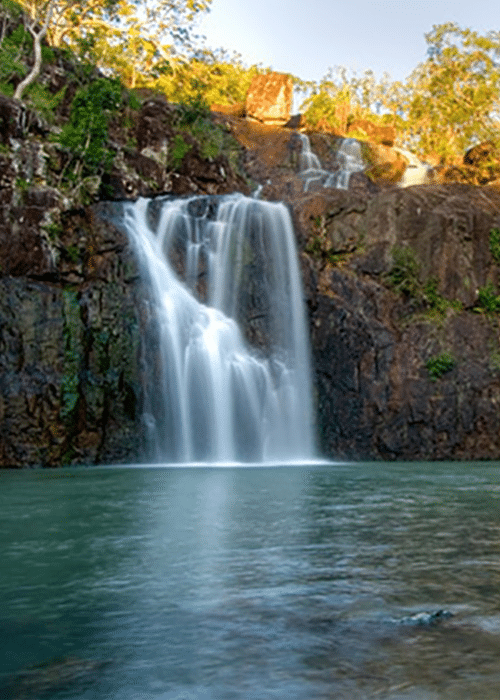
Cedar Creek Falls: Swimming Pools and Waterfalls
Distance: 1.1 kilometres (30 minutes) Difficulty: Moderate Best for: Those comfortable with significant climbing on return
Cedar Creek Falls rewards those willing to descend through eucalypt forest and dry rainforest to the rock pools below. The waterfall is spectacular in the wet season — less prominent in drier months, but the swimming holes remain the primary draw.
The downhill section presents numerous steps and steep descents. The return journey is significantly more demanding — prepare mentally for the climbing you’ll do on the way back. Sturdy walking shoes with excellent grip are essential on this walk.
The payoff is swimming holes unique to the Scenic Rim’s eastern section. They’re the only substantial natural pools on the mountain, and they’re accessible year-round. Locals favour this walk, which speaks to its quality.
Visit in warmer months (late spring through autumn) if swimming is your primary goal. The water is cold even then. The icy immersion after descent through warm forest creates a profound contrast — the kind of sensory experience that registers as genuinely refreshing.
Rainforest Skywalk: Canopy Perspective
Distance: 1.5 kilometres (45 minutes) Difficulty: Easy to moderate Best for: Those interested in seeing rainforest structure from unusual perspective
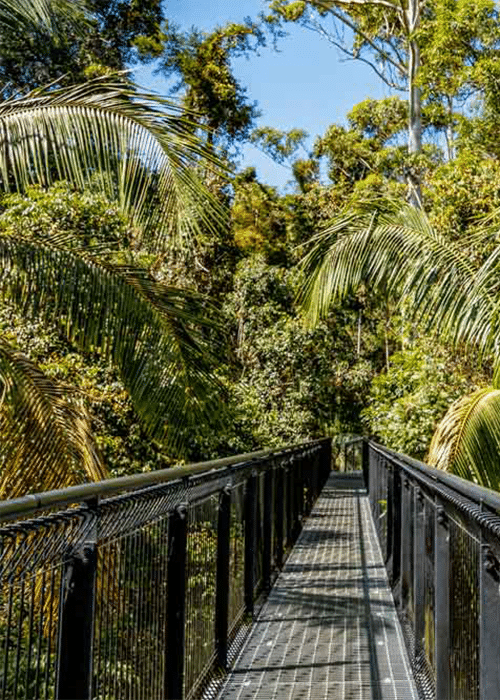
This is fundamentally a different experience from ground-level walking. The Rainforest Skywalk is an eco-adventure set within 30 acres of privately owned rainforest beside Cedar Creek’s clear rock pools.
The experience combines three distinct components: forest floor trails that introduce the rainforest ecosystem, high-tech upper canopy bridges offering aerial perspective, and a 40-metre cantilever bridge that extends 30 metres above the creek and rainforest floor — a genuinely thrilling vantage point if you’re comfortable with heights.
The cantilever creates an experience that ground-based trails cannot: you’re immersed within the rainforest from above, seeing the canopy structure, the interconnected nature of tree communities, and the dramatic drop below — all from complete safety.
This walk is wheelchair-accessible up to the Skywalk bridge, making it unusually inclusive for this terrain. Entry is approximately $20 per person, with family rates available. Bookings are advised, particularly on weekends.
This is not a “quick walk in nature.” It’s a deliberate immersion in rainforest structure and perspective. Allow time to move slowly, observe bird activity, and simply be present within the canopy.
Witches Falls Circuit: Ancient Figs and Rainforest
Distance: 3.1 kilometres return (60 minutes) Difficulty: Moderate Best for: Moderate fitness, interest in old-growth forest features
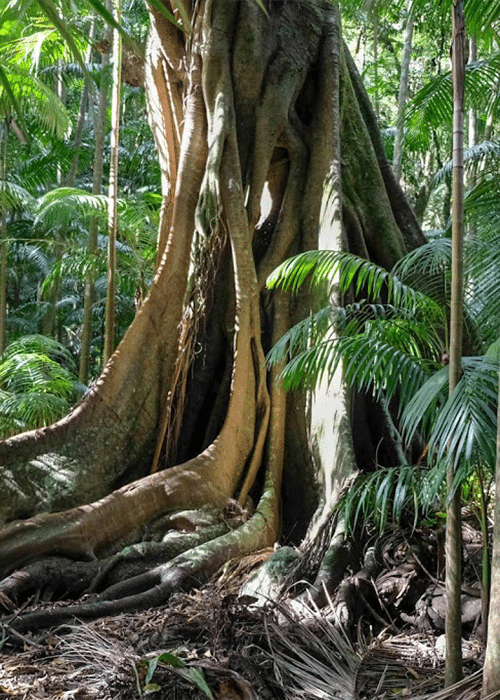
Witches Falls offers a complete rainforest walk with specific characteristics: ancient giant strangler figs, seasonal waterfall and lagoon, and the sense of walking through genuinely wild country.
Begin by descending through banksia trees into the rainforest proper. The atmosphere shifts noticeably. Banksia gives way to dense subtropical vegetation. Giant strangler figs emerge — ancient relationships where one tree gradually embraces another until the inner tree dies and is absorbed, leaving a hollow fig structure.
The waterfall flows reliably after recent rain and is best viewed from an elevated lookout platform — accessible via a 200-metre detour from the main circuit. The lagoon expands in wetter seasons. This walk rewards patience: take time to observe the birdlife, listen to the calls, and steep yourself in the natural beauty of this ancient forest community.
The walking surface is rough and potentially slippery, particularly after rain. Bring good shoes and, in summer, insect repellent. The rainforest is most active in summer (and most buggy) — spring and autumn offer similar biological richness with less insect pressure.
The directional signage is adequate but not extensive. Pay attention to trail markers and move deliberately. This walk doesn’t rush you — you shouldn’t rush it either.
When Is the Best Time to Visit Scenic Rim East?
Summer (December–February). Warm, humid, lush vegetation. Afternoon thunderstorms frequent. Water flows strongly through waterfalls and creeks. Leeches active after rain; insect activity peaks. Fewer visitors. Bring insect repellent.
Autumn (March–May). Mild temperatures, reduced humidity, excellent visibility. Deciduous trees show colour shifts. Water levels remain good. Weather is reliable. Minimal crowds. One of the best seasons.
Winter (June–August). Cool mornings, possible mist and low clouds, reduced rainfall. Water flows are lower. Wear layers. Frost occasionally at higher elevations. Excellent for walks where water isn’t the primary feature (Witches Falls as atmospheric experience rather than waterfall spectacle).
Wildlife and Flora Specific to the Eastern Section
The eastern Scenic Rim’s mixed vegetation — eucalypt forest transitioning to rainforest — supports different wildlife communities than the purely rainforest sections to the west.
Kookaburras are abundant, their laughing call a constant presence. King Parrots with brilliant red plumage frequent the forest edges. Lyrebirds are present but shy — listening rather than seeing is often the best you’ll achieve.
Eastern water dragons sun themselves on rocks beside Cedar Creek — large, impressive reptiles that will flee if approached. Common blue-tongue skinks are occasionally spotted on trails.
The rainforest’s invertebrate life is exceptional. Brilliant blue butterflies, stick insects, and countless small creatures create the forest’s sensory richness.
Giant trees are a feature: Red cedars (the tree for which Cedar Creek is named) are true giants, reaching 40+ metres. Fig trees — both stranglers and free-standing — define the rainforest landscape visually.
Can You Swim at Cedar Creek Falls?
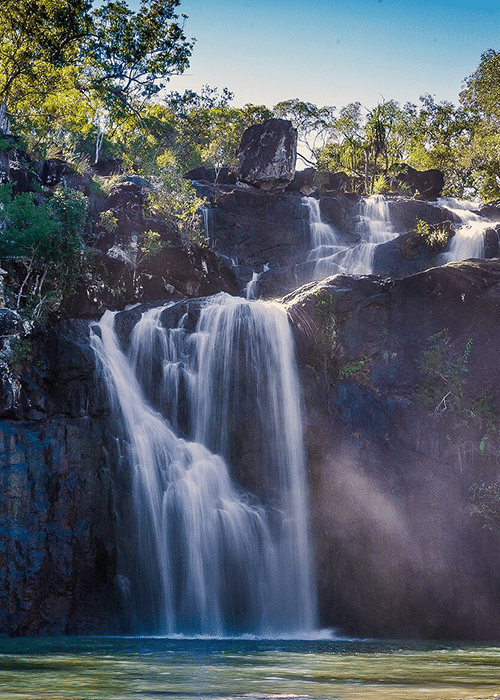
Yes — Cedar Creek Falls is the Scenic Rim’s most popular swimming destination on Tamborine Mountain, and one of Queensland’s finest mountain swimming holes. The falls cascade through eucalypt forest into a series of natural rock pools, where the water temperature typically hovers between 10–15°C year-round. The cold is immediate and absolute — a genuine shock that pulls you fully into the present.
The walk to the pools is 1.1 kilometres return, taking approximately 30 minutes each way. The descent is steep and involves many steps; the return climb is more demanding. Sturdy shoes with good grip are essential. Once at the pools, you can swim beneath the cascade itself — particularly spectacular after rain, when the falls are at full force.
The swimming holes are accessible year-round, though late spring through autumn offers the warmest conditions. Arrive early on weekends during summer to secure the best pools before the crowds arrive. In autumn and winter, you may find the falls entirely to yourself.
The pools are the only natural swimming holes on Tamborine Mountain, which is precisely why locals return to them season after season. The effort to reach them is part of their value: you earn the cold water and the quiet.
How Far Is Tamborine Mountain from Brisbane?
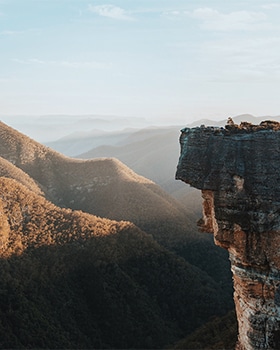
Tamborine Mountain is approximately 65–70 kilometres south of Brisbane, making it an easy day trip from the city — typically 55–70 minutes depending on your starting point and traffic. From the Gold Coast, it is even closer: approximately 45 kilometres or 40 minutes’ drive through the hinterland.
Wander at The Overflow 1895 in the Scenic Rim is approximately 48–56 kilometres from Cedar Creek Falls and the Rainforest Skywalk, depending on the specific destination — roughly 55 minutes of increasingly rural driving.
The best approach from Brisbane or the Gold Coast is via Oxenford or Canungra, both of which offer scenic driving routes through Scenic Rim country. Allow a full day for the eastern section: the combination of Cedar Creek Falls, a Rainforest Skywalk visit, and a slow lunch at a local cafe is a complete and satisfying day in the landscape.
Supporting Local and Sustainable Food & Drink

VK Everydays, your first stop heading east from Wander, sits in the heart of Beaudesert. It serves good coffee and seasonal food specials in a warm atmosphere. The grab-and-go breakfast selection is excellent if you’re heading straight toward the trails.
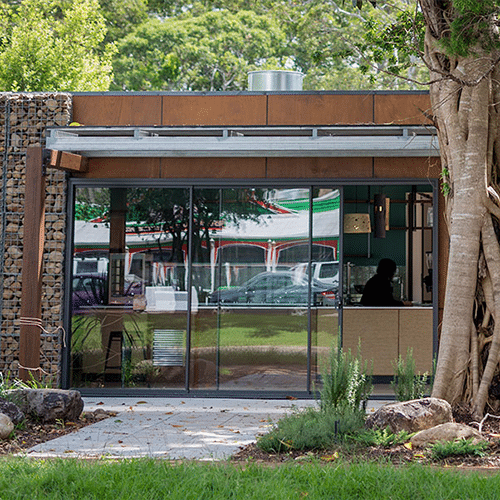
North Stores on Tamborine Mountain is an environmentally sustainable and architecturally considered food, art, and nature precinct. It houses an eatery, art studios, and ceramics studios. You can dine in, purchase take-home meals and picnic baskets, or browse artworks. The kitchens maintain a kitchen garden and closed-loop waste system that minimises disposal and nourishes soil.
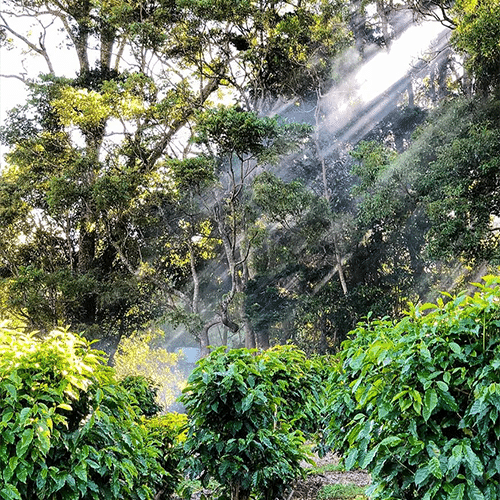
Tamborine Mountain Coffee Plantation operates a crop-to-cup sustainable plantation tour. The cafe serves excellent coffee, cocktails, breakfast, and lunch. With over half an acre of outdoor dining and picnic area, it’s ideal for a long, unhurried meal with views across the estate. Multiple dietary preferences are accommodated: gluten-free, vegetarian, and vegan options are abundant.

Canungra Hub Café prioritises organic, locally sourced, and home-grown ingredients. Everything is prepared fresh in-house. Known for generous hospitality and consistently bumping into locals, this is exactly where you go if you want to feel genuinely connected to the community.
Beyond the Major Trails: Additional Eastern Experiences
Tamborine Mountain Scenic Railway — a heritage train journey with restored passenger carriages, running through the mountain landscape offering perspectives you can’t gain from ground level.
Summergrove Estate — a garden property featuring native and ornamental plants, with a cafe and shop. Walking through garden design offers context for understanding the landscape beyond pure wilderness.
Artist studios and craft workshops — Tamborine Mountain hosts a community of artists and craftspeople. Studio visits, workshops, and gallery browsing offer cultural immersion beyond nature walking.
How Do You Make the Most of a Visit to Scenic Rim East?
Cedar Creek Falls is the most physically demanding walk in this eastern section — choose it if you’re moderately fit and prepared for sustained climbing on the return. Witches Falls is rewarding without being as strenuous. The Rainforest Skywalk offers a qualitatively different experience — it’s not comparing to other walks; it’s offering perspective that ground-based walking cannot.
The eastern Scenic Rim is also where cafes and local hospitality options are most concentrated. Build time for a long lunch or coffee stop into your day. Slow travel means honouring the communities you’re visiting, and the eastern region makes this genuinely easy and rewarding.
If you’re splitting time between multiple Scenic Rim sections, the eastern orientation should include at least one substantial trail (Witches Falls or Cedar Creek) and intentional time in a local cafe. This rhythm — walking, eating, conversation, reflection — is what the landscape and community are designed to offer.
About the Author
Ready to experience the Scenic Rim for yourself?
Explore Wander in the Scenic Rim and find your place in nature →
Continue Reading:
Explore the Scenic Rim: Binna Burra
Binna Burra is an Aboriginal word meaning “where the beech tree grows.” The walks at Binna Burra wind through subtropical rainforest in Lamington National Park
Explore the Scenic Rim: Green Mountains
The Green Mountains section of Lamington National Park sits at the heart of the Gondwana Rainforests of Australia — a World Heritage Area defined by ongoing geological processes,
Wild Swimming in the Scenic Rim
In Queensland’s Scenic Rim, the swimming holes are not conveniences—they are destinations. Cedar Creek Falls cascades …